- DataArts News


Five Key Takeaways from Our 2025 Research
- Posted Dec 19, 2025
SMU DataArts’ 2025 research reveals significant trends in the arts and culture sector, from the measurable impact of cultural resources on community well-being to persistent financial pressures across organizations of all sizes and disciplines. This year, five key takeaways emerged that capture the current state of the field—painting a picture of a sector adapting and evolving.
We’ve also included a couple of honorable mentions for additional context.
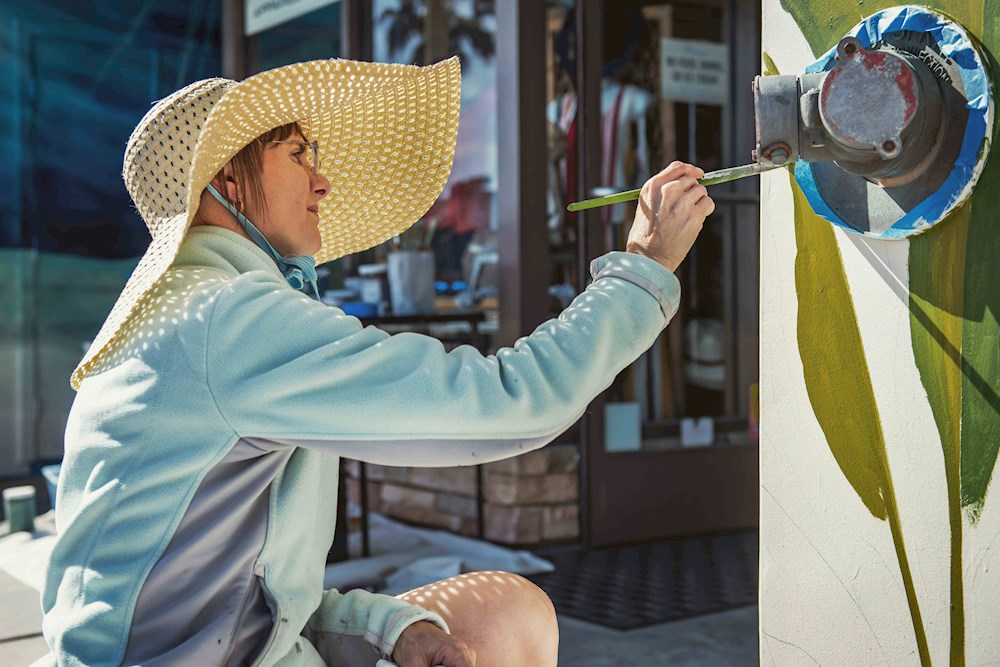
Image featuring muralist, Catherine Panofsky, Avila Beach, California. Photo by Tim Mossholder (2019).
Communities with greater access to cultural resources experience measurable benefits in livability and well-being.
Understanding how arts and culture shape community health begins at the local level. A study conducted by SMU DataArts in partnership with ArtsFund explores how arts and culture contribute to the overall livability of Washington communities. For Washingtonians living in communities with abundant cultural resources, the study found greater civic connection, higher levels of community engagement and support, and expanded economic opportunities compared to those in similar communities with fewer resources. The strength of cultural investment held even when controlling for population size, income, education levels, and rural versus urban settings.
Washington’s arts ecosystem is highly vibrant, yet the state lagged behind the national average in arts funding—$0.98 per capita versus the national $2.29 per capita. These findings suggest a critical need for increased investment to support the state’s cultural infrastructure and to foster a healthy environment for arts and cultural nonprofit organizations. The study also highlighted the potential of arts and culture as a tool for building community health.
Inclusion is a driver of retention, job satisfaction, and likelihood to recommend an employer.
While investment in cultural infrastructure matters, so does the internal health of arts organizations themselves—particularly how they support their workforces. In response to shifting approaches to workforce inclusion efforts within both public and private institutions, SMU DataArts partnered with the Los Angeles County Department of Arts and Culture to better understand the components and role of inclusion in managing arts workforces. Employees in more inclusive workplaces experience higher levels of job satisfaction, are more likely to recommend their organization to prospective employees seeking a similar role, and are less likely to seek positions elsewhere. These positive effects are consistent across race, gender, and sexual orientation groups.
However, the research also highlights persistent barriers. Positive employee outcomes are sometimes lower in more diverse workplaces, and job satisfaction was lower in organizations with a higher proportion of BIPOC or LGBTQ+ employees. Actively fostering a climate of inclusion should be a key objective for nonprofits aiming to retain and engage staff, with efforts considering how individuals of diverse demographic backgrounds experience inclusion differently.
Of 2,500+ women artists surveyed, 79% cite peer networks as vital—yet only 25% feel treated equitably in the art world.
Commissioned by Anonymous Was A Woman (AWAW) and conducted in collaboration with journalists Charlotte Burns and Julia Halperin and arts leader Loring Randolph, SMU DataArts developed a survey to gain a better understanding of women artists’ lives and careers. The findings reveal both sources of resilience and urgent systemic barriers.
A majority of respondents (79%) cite artistic community and networks as vital to their careers, with peer support playing an essential role. Yet respondents also reported persistent gender and age discrimination—only a quarter say they are treated equitably within the art world. Additional obstacles include financial precarity, institutional exclusion, and the invisible labor behind sustaining a creative life.
This report provides a reference point for the experiences of women artists across demographics and may influence decision-makers such as funders, museum board members, and gallerists. Women artists may also find this data beneficial in strengthening support networks and as a tool for advocacy and philanthropy.
Financial pressures mount across the sector, with impacts varying sharply by organization size and discipline.
These individual struggles mirror broader financial realities confronting arts organizations nationally. Over 6,500 organizations of varying budget size, geographic location, and artistic discipline completed our Cultural Data Profile (CDP), providing critical detail for our research team to evaluate broad trends shaping the sector from 2019 to 2024.
The data revealed a sector at an inflection point. While the composition of earned and contributed revenue returned to pre-pandemic patterns in 2024, average revenue and expenses fell below pre-pandemic levels for the first time since 2021. Revenue declines outpaced expense reductions, leaving some organizations with deficits or thin margins and eroding working capital reserves. Most organizations experienced some revenue growth in 2024, but some experienced large losses, signaling that financial pressures and challenges are not felt equally across the sector.
A deeper examination by organization size and artistic discipline revealed the uneven nature of these pressures. Large organizations experienced sharp revenue losses during the early pandemic and again from 2023 to 2024—a 4% decline since 2019—while mid-sized and small organizations saw growth over the past six years. Small organizations grew the most, with revenue increasing 58% since 2019, though this growth slowed in 2024 to just 1%.
Performing arts organizations have faced the most turbulent financial journey. These organizations experienced larger drops in revenue (27%) and personnel spending (28%) in 2024 compared to museums or community organizations. Performing arts organizations lost an average of 3.2 full-time staff positions, more than the national average of 2 positions lost across all arts disciplines.
These findings help arts leaders better understand where their organization stands within the national landscape. They also provide critical information to all stakeholders—artists, funders, service organizations, and leaders—about where additional support may be needed, especially as pandemic-era relief fades.
Artificial intelligence offers promise for public sector evaluation—with a framework for responsible integration.
As the sector grapples with financial constraints and seeks more efficient operations, emerging technologies present both opportunities and questions. A report authored by SMU DataArts' Daniel Fonner explores how artificial intelligence can be responsibly integrated into program evaluation and auditing processes in the public sector. The research provides a framework and recommendations for effectively applying AI while fostering trust and accountability—critical considerations as arts organizations and funders explore how these tools might support their work without compromising the human judgment essential to evaluating cultural impact.
Honorable Mentions
SMU DataArts’ research scope is dynamic, extending from national sector analysis to targeted regional studies that address the specific needs of local funders and agencies. This year, we partnered with the Kenneth Rainin Foundation (Bay Area) as well as with the Rhode Island State Council on the Arts (RISCA) and Rhode Island Foundation (RIF) to examine their arts ecosystems' post-pandemic trajectories. Both projects revealed financial pressures, adaptive capacity, and sources of resilience unique to their regions—demonstrating the value of research designed to inform community-level decision-making.
Reflecting on 2025’s findings, research and data continue to illustrate both the resilience and vulnerability of the arts and culture sector. As we look to 2026, we are eager to explore new questions, uncover deeper insights, and contribute to the ongoing growth and sustainability of the field.
Stay Informed on the Latest in Arts Research
Sign up to receive timely updates on groundbreaking research, expert articles, and exclusive invitations to SMU DataArts webinars.
Discover How We Can Support Your Mission
We take a collaborative approach to research design—co-designing with partners to answer their pressing questions and meet their project needs.